Moorea, French Polynesia · September 2026
Five-thirty in the morning. Still dark. The boat was anchored offshore, so we waded through the shallows to reach it, climbed aboard, and headed out before the sun came up.
Moorea sits about 12 miles northwest of Tahiti. From the water, the island reads as a series of green ridgelines cutting into the sky. At that hour, everything was silhouette.
The Lagoon
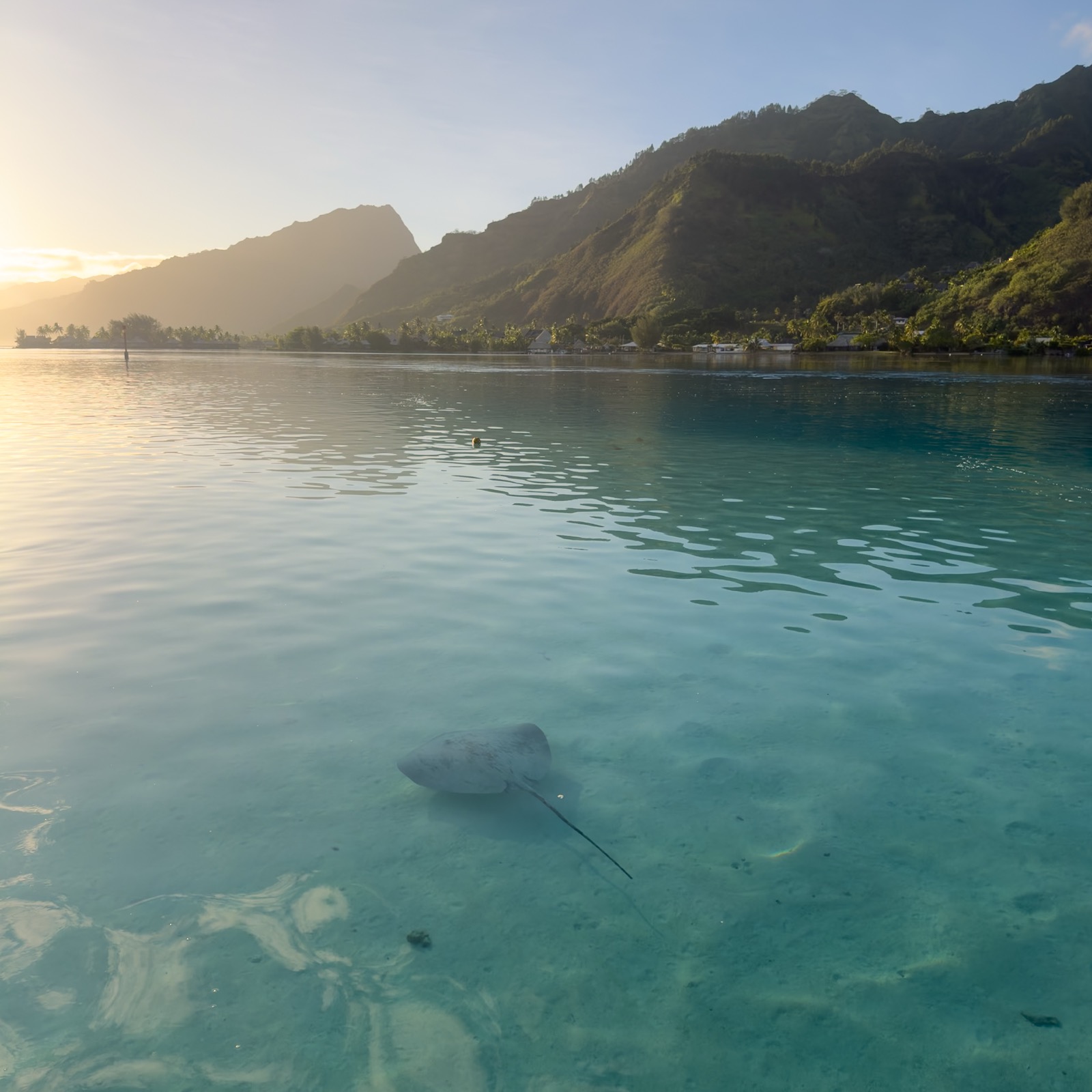
By the time the light arrived, we were inside the lagoon.
Blacktip sharks. Stingrays. They moved through the water around us in the early morning, unhurried. The blacktips were three to four feet long, working the sandy bottom just below where we were swimming, turning in slow arcs. The stingrays held their position and let the current do the work.
This is one of those moments that doesn't photograph well and doesn't need to. You're in clear, warm water at sunrise in French Polynesia, with sharks moving beneath you, and the island is right there, and none of it feels threatening. The blacktips are curious at best, indifferent at worst. They're not interested in you. The same cannot always be said of the camera.
We stayed in the water until the guides signaled it was time to move.
Open Ocean
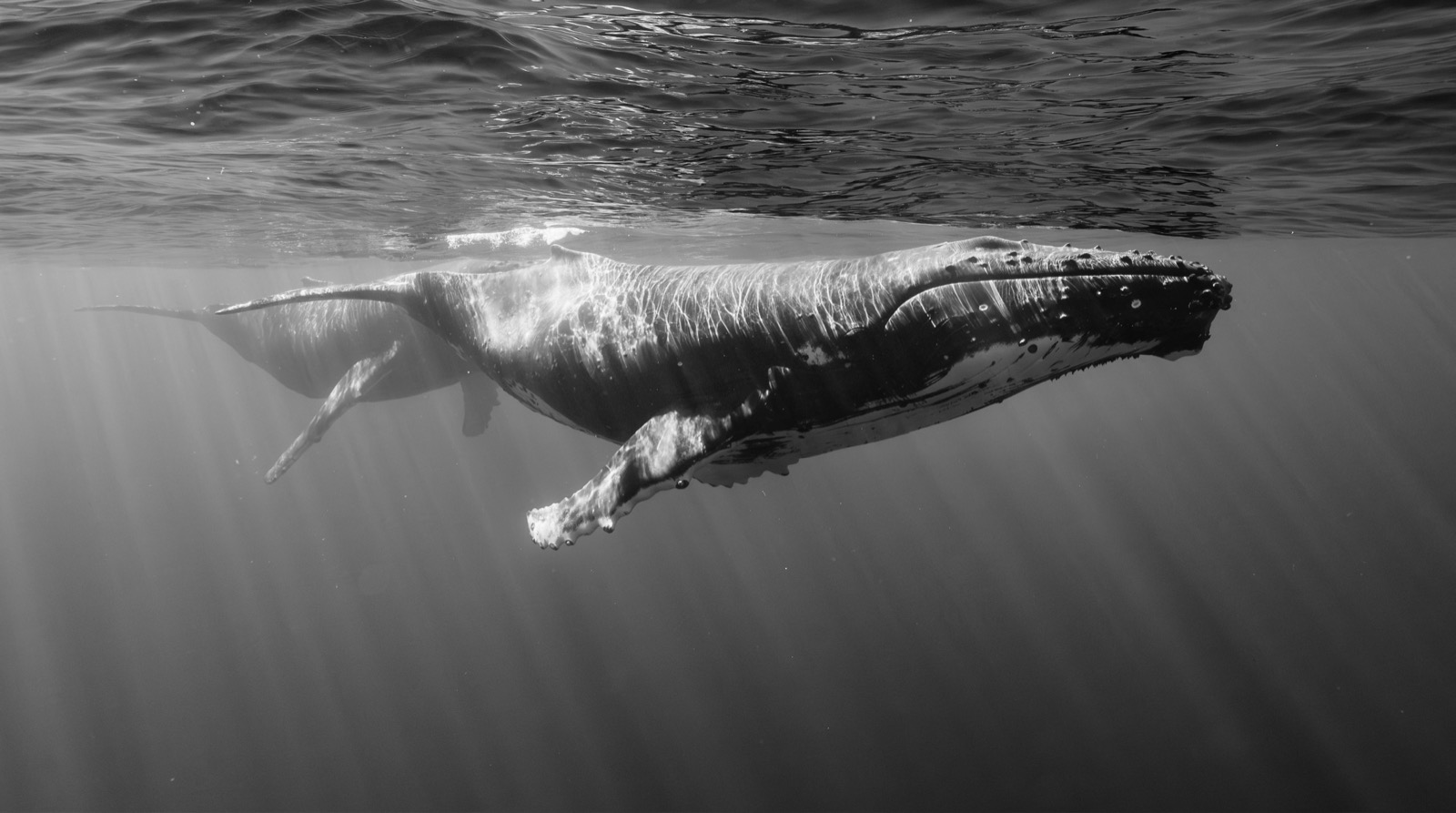
The boat headed out past the reef into the open ocean. The bottom dropped away quickly. In parts of the channel between Moorea and Tahiti, the water runs more than six thousand feet deep. You can't see it from above, but you feel the shift when the reef disappears and the color changes from turquoise to a deep, saturated blue.
We saw pilot whales first. A small group, moving slowly along the surface. Then oceanic whitetip sharks: a species that hunts in open water and carries itself differently than the blacktips in the lagoon. Longer, more deliberate. We watched them from the boat.
Then dolphins.
The guides cut the engine and we floated for a while. The objective for the day was humpbacks. September is toward the end of their season in French Polynesia. They arrive from Antarctica starting in July and move on by October. There were no guarantees.
The Calf
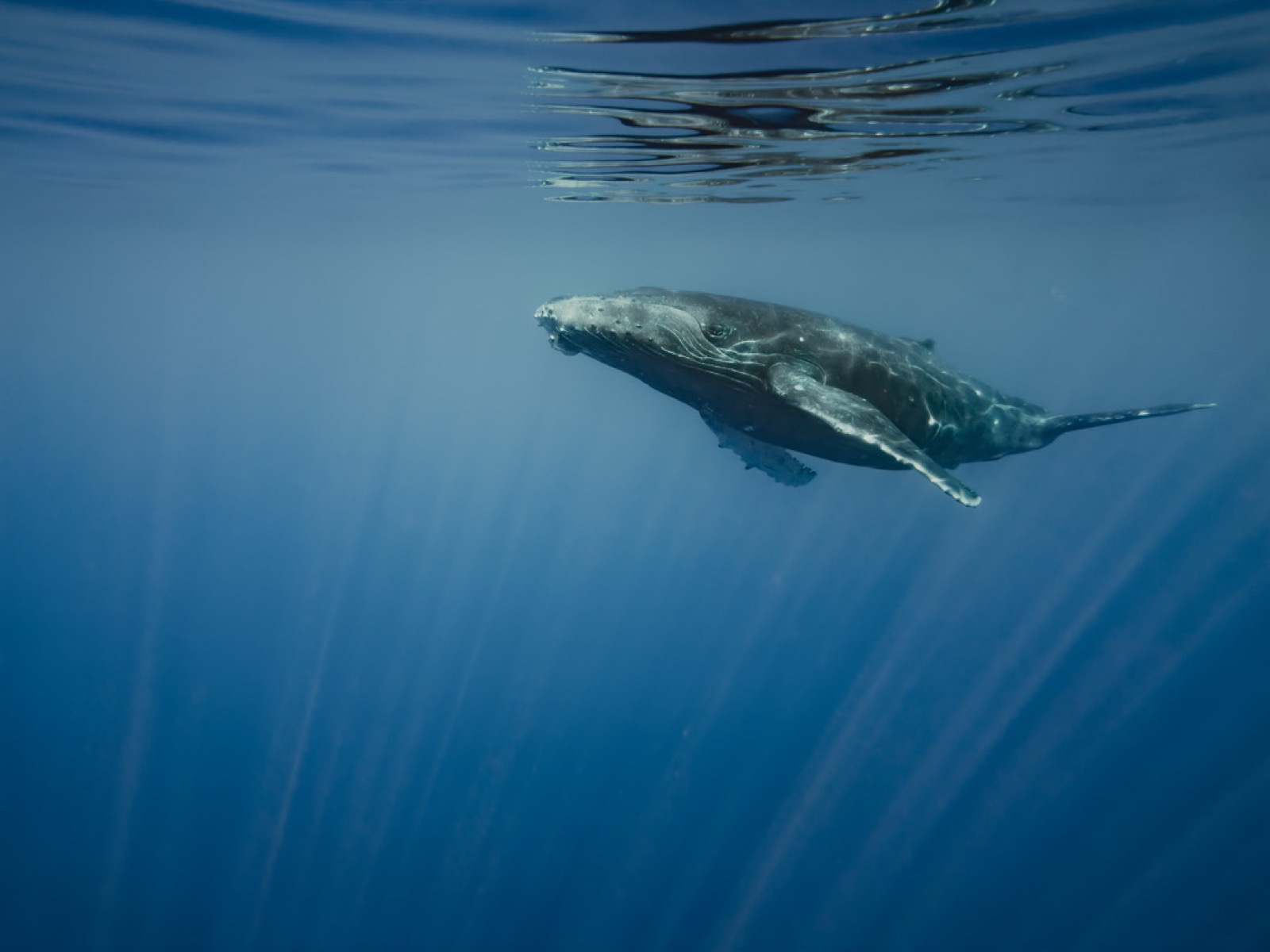
The first humpback surfaced about fifty meters out.
A mother. She moved without hurry, exhaling once, then again, and then sank below the surface. We went in. The water was clear enough to see her shape at depth, and then to see the calf beside her.
The calf was maybe a third of her size. It rose to breathe, oriented toward us, and started swimming in our direction.
I started backing up in the water, giving it space. It kept coming.
It stopped about six feet away.
At that distance you can see the texture of the skin, the barnacle patterns, the shape of the eye. It held there for what felt like several minutes, watching. The mother stayed below, close, unbothered.
It wasn't afraid of us. It was curious. There is a significant difference.
Eventually the calf turned and went back to its mother. They moved off together, slowly, and we followed at a distance until they dove.
The Singer
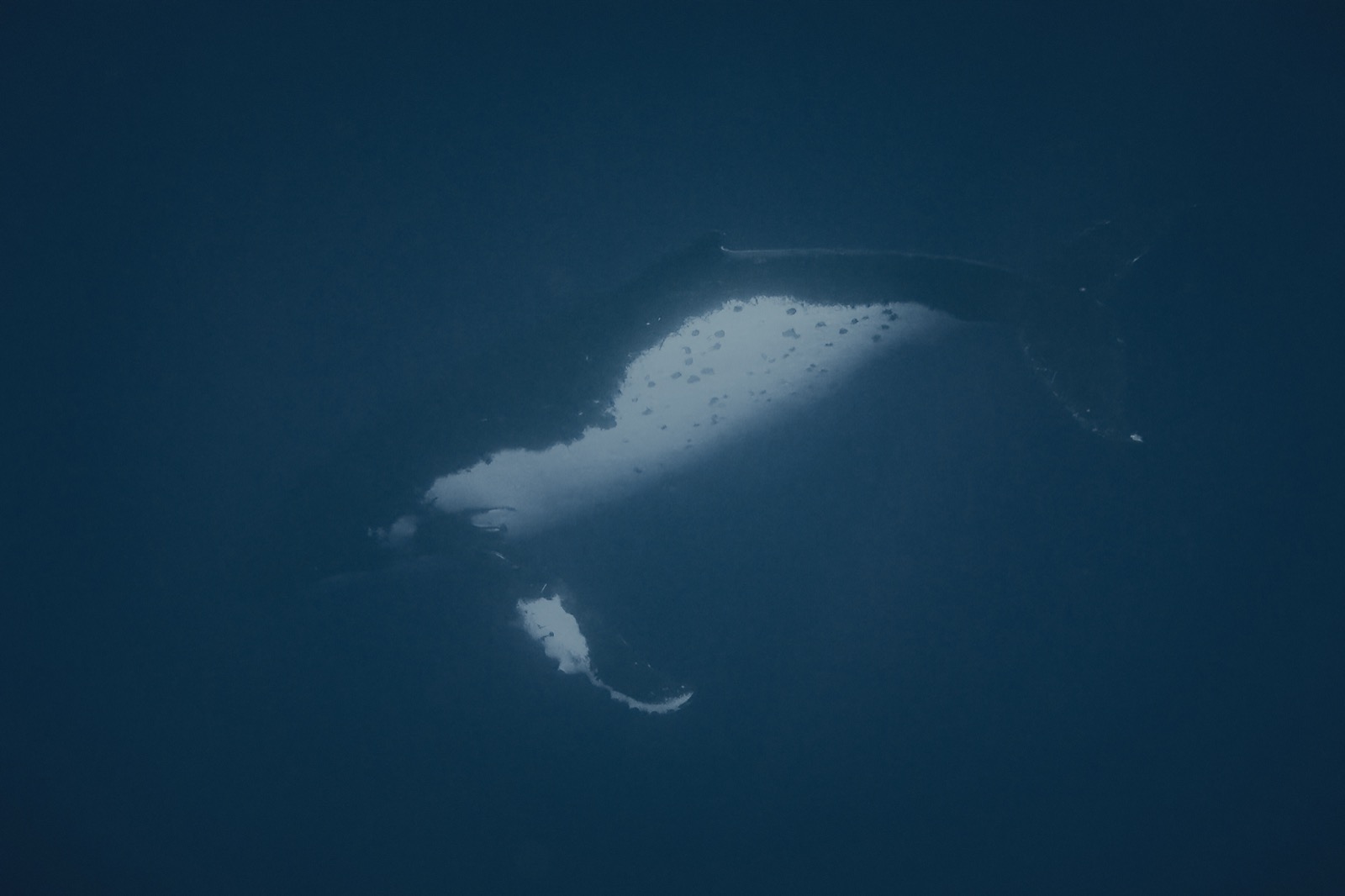
Later in the day, the guides found another whale.
This one was stationary, deep. The sound arrived first: a low, resonant pattern that moved through the water and into your chest simultaneously. Something between a vibration and a voice. The frequency was low enough that you felt it as much as heard it.
Male humpbacks sing during the breeding season. The songs can last for hours and carry for miles. Each individual pattern is distinct; researchers can identify individual whales by their songs. The singer surfaced eventually, and I was in the water when it did. For a few minutes I floated above six thousand feet of ocean, with the sound still moving through me and the whale right there.
The Guides
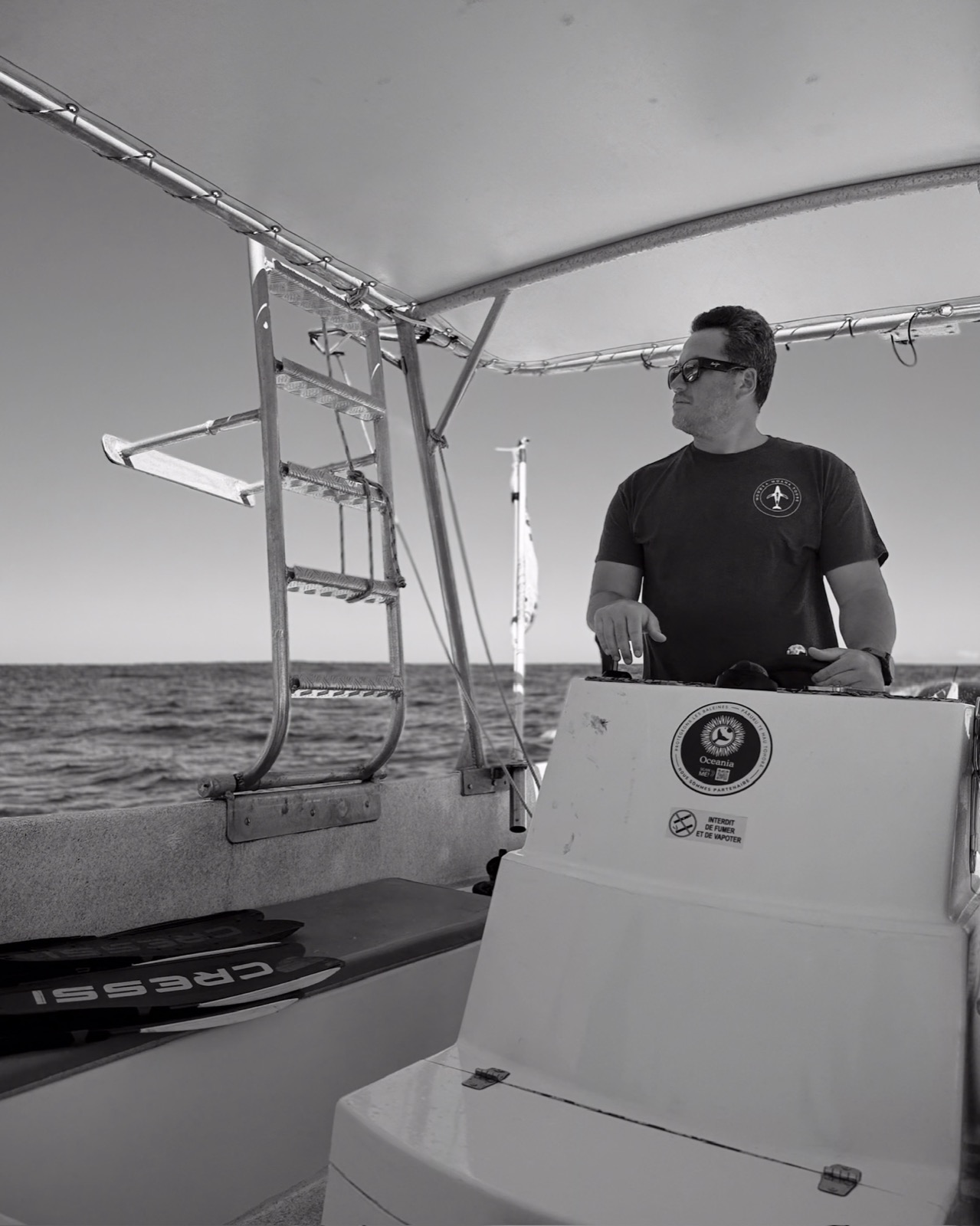
The captain had been running these waters for years. He read the channels the way a tracker reads the ground: where the whales tend to hold, how the weather affects their movement, when to cut the engine and let the boat drift. None of what we encountered that day was an accident. The guides knew where to go and how to move when we got there.
At Ol Pejeta, the rhino caretakers know the same kind of thing about their animals: the individual patterns, the preferences, the trust built over years of consistent presence. Different ocean. Same commitment.
On the Image
French Polynesia doesn't appear in States of Nature. The book covers the natural world on different terms: Antarctica, Iceland, Kenya, Patagonia. But days like this inform all of it. What you learn in the water in Moorea comes with you to the Maasai Mara, and to the ice shelf, and to every moment where you're trying to be still enough for something wild to come close.
Moorea, French Polynesia – September 2026